A medical waste platform that ties admin operations, client portal, and driver app into one source of truth.
Overview
BioWaste handles biohazard collection across hospitals and clinics — a regulated, time-sensitive operation that lives in three very different roles. Dispatchers scheduling and routing from the office. Hospital staff requesting pickups and tracking compliance. Drivers running stops in the field. The legacy stack handed each role a different tool, and the seams showed up as missed manifests, double-entered data, and compliance risk. I designed BioWaste as a single product with three role-specific surfaces wired into one shared backbone.
Challenge
Three audiences, one regulated workflow.
Dispatchers needed depth and density. Routes, drivers, exceptions, compliance state
Hospitals needed clarity and confidence. Schedule a pickup, see proof, audit trail
Drivers needed speed and one-thumb operation in the field
Every surface had to read the same job, in the same state, in real time. Drift was a regulatory issue, not a UX one.
Role
I led product design across the platform.
- Mapped the end-to-end job lifecycle from request through pickup through compliance sync
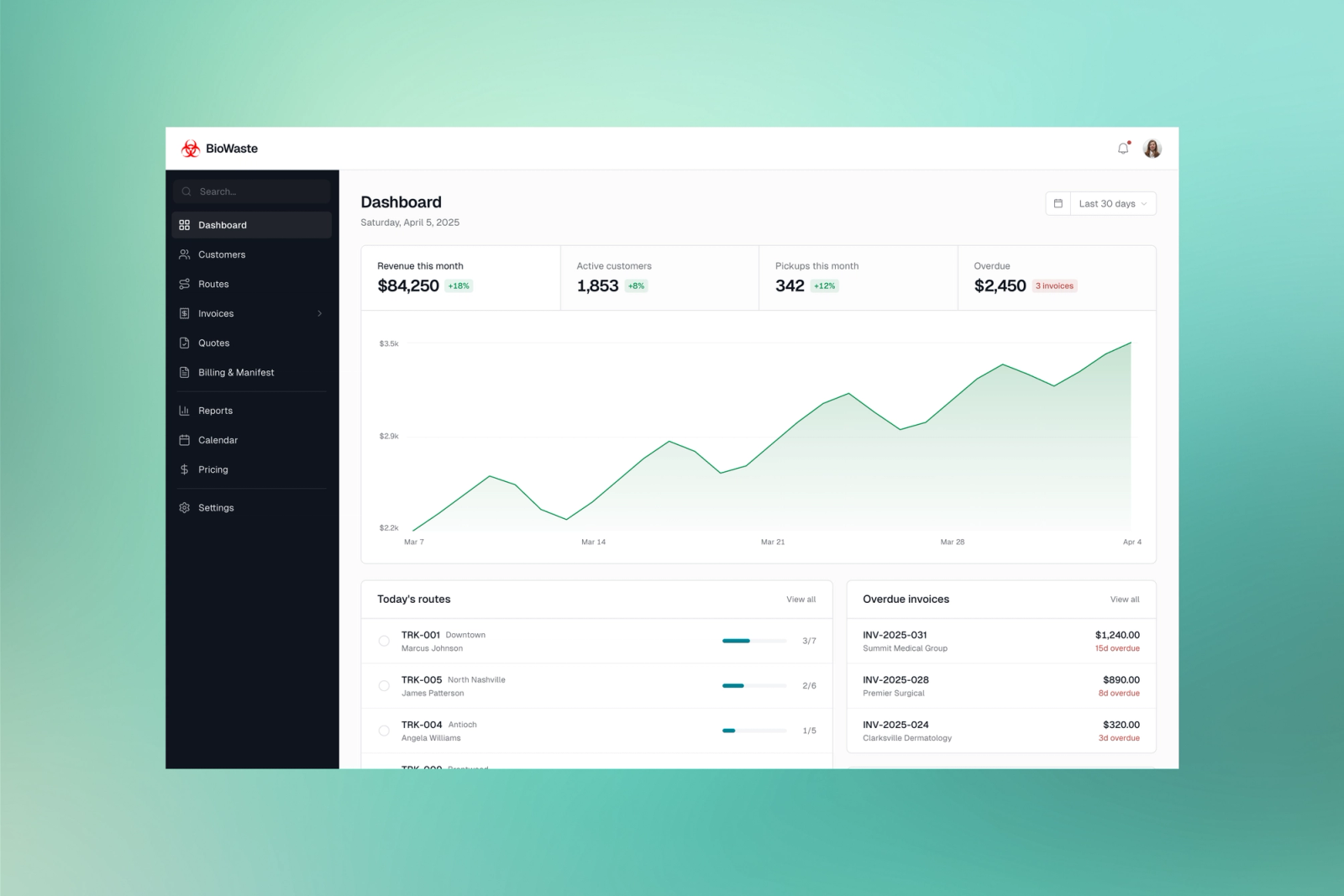
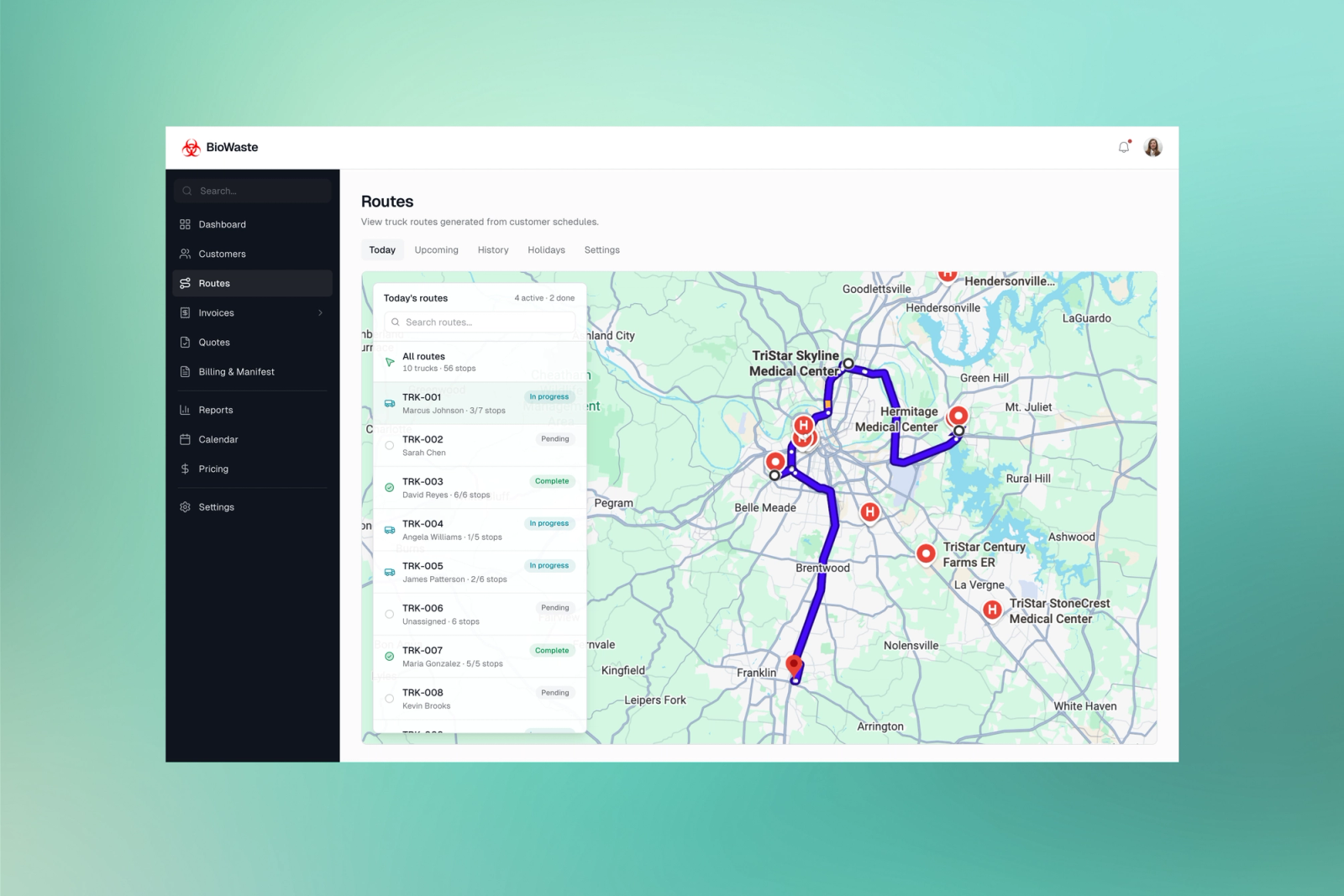
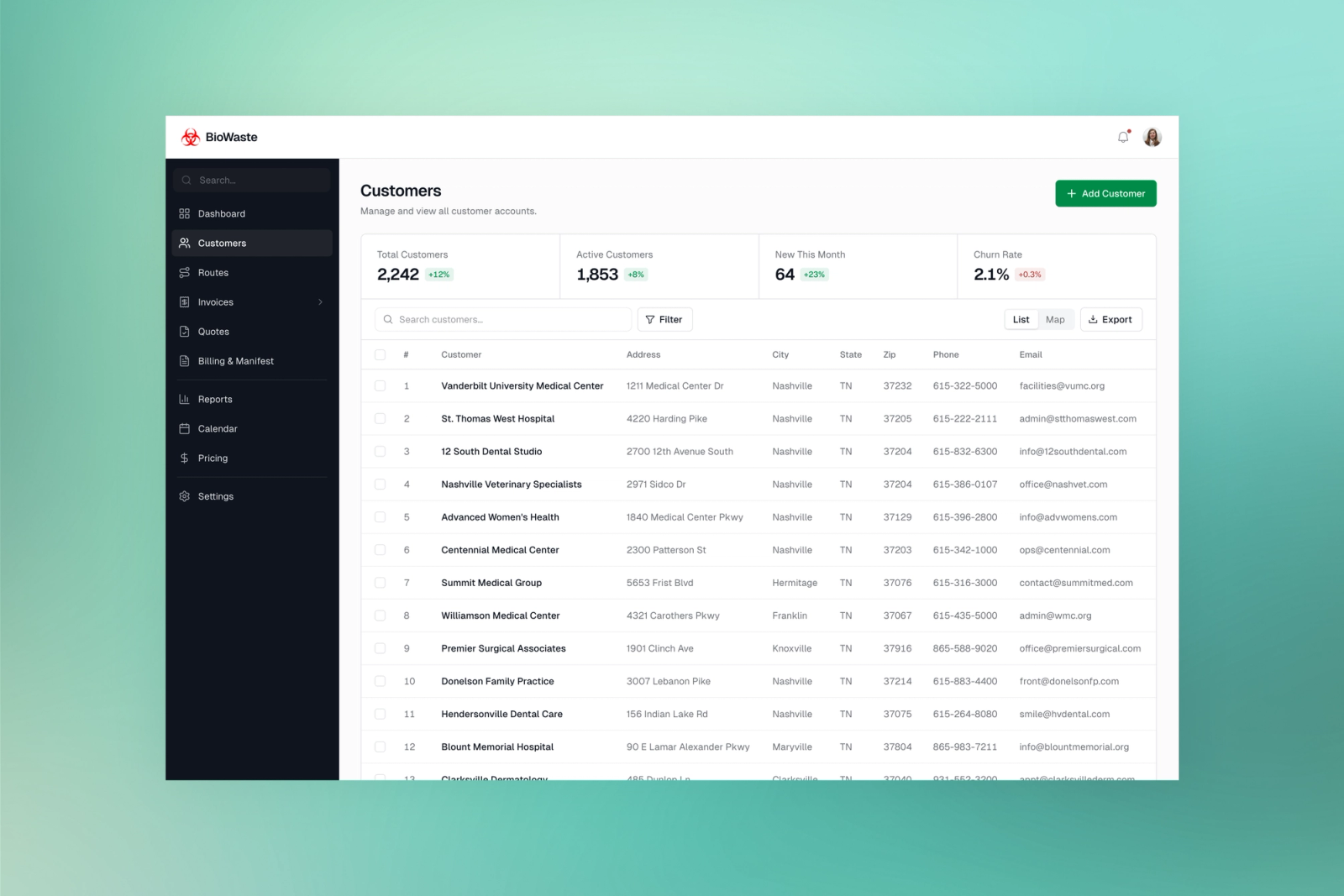
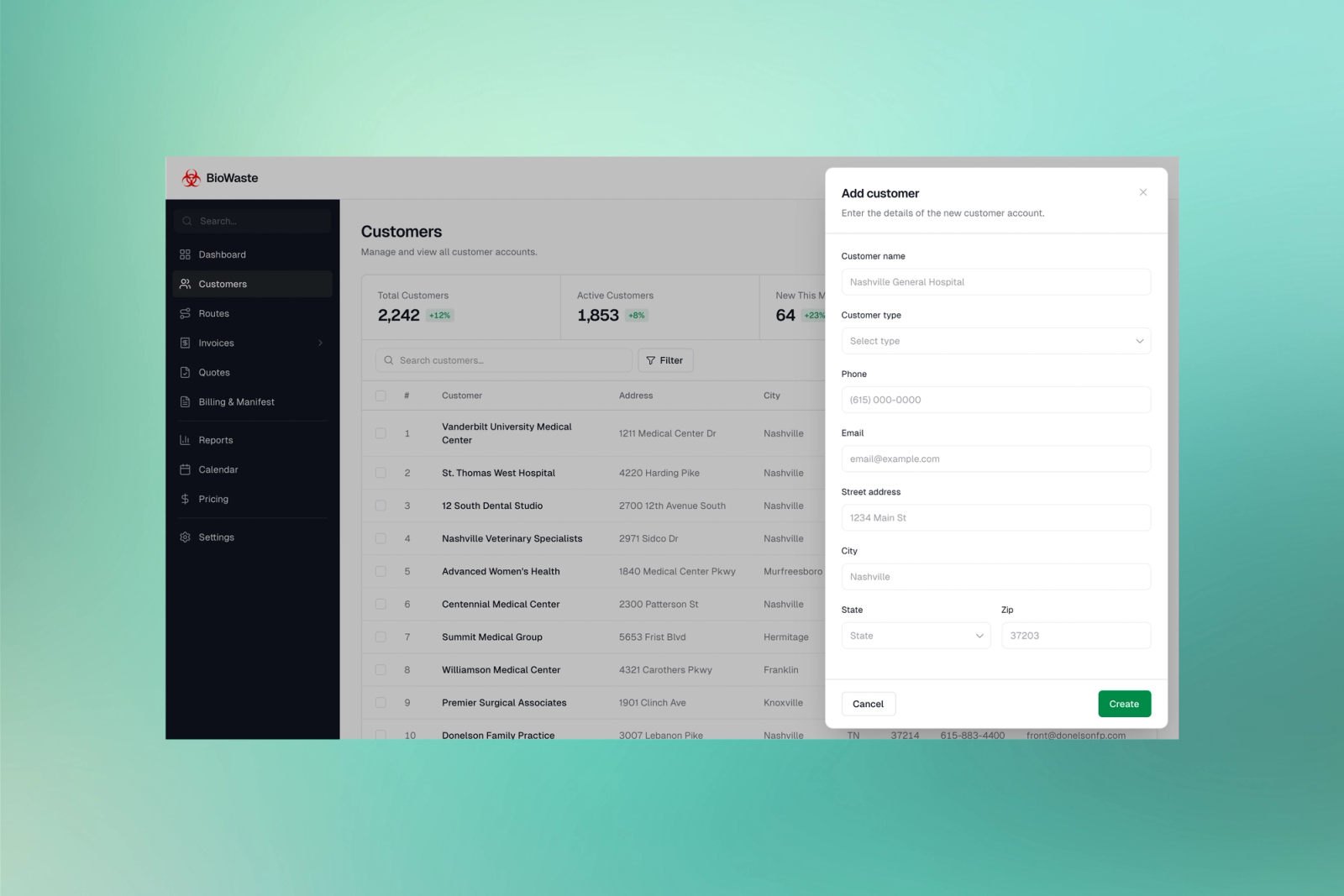
- Designed the admin console. Route board, job detail, exception handling, compliance ledger
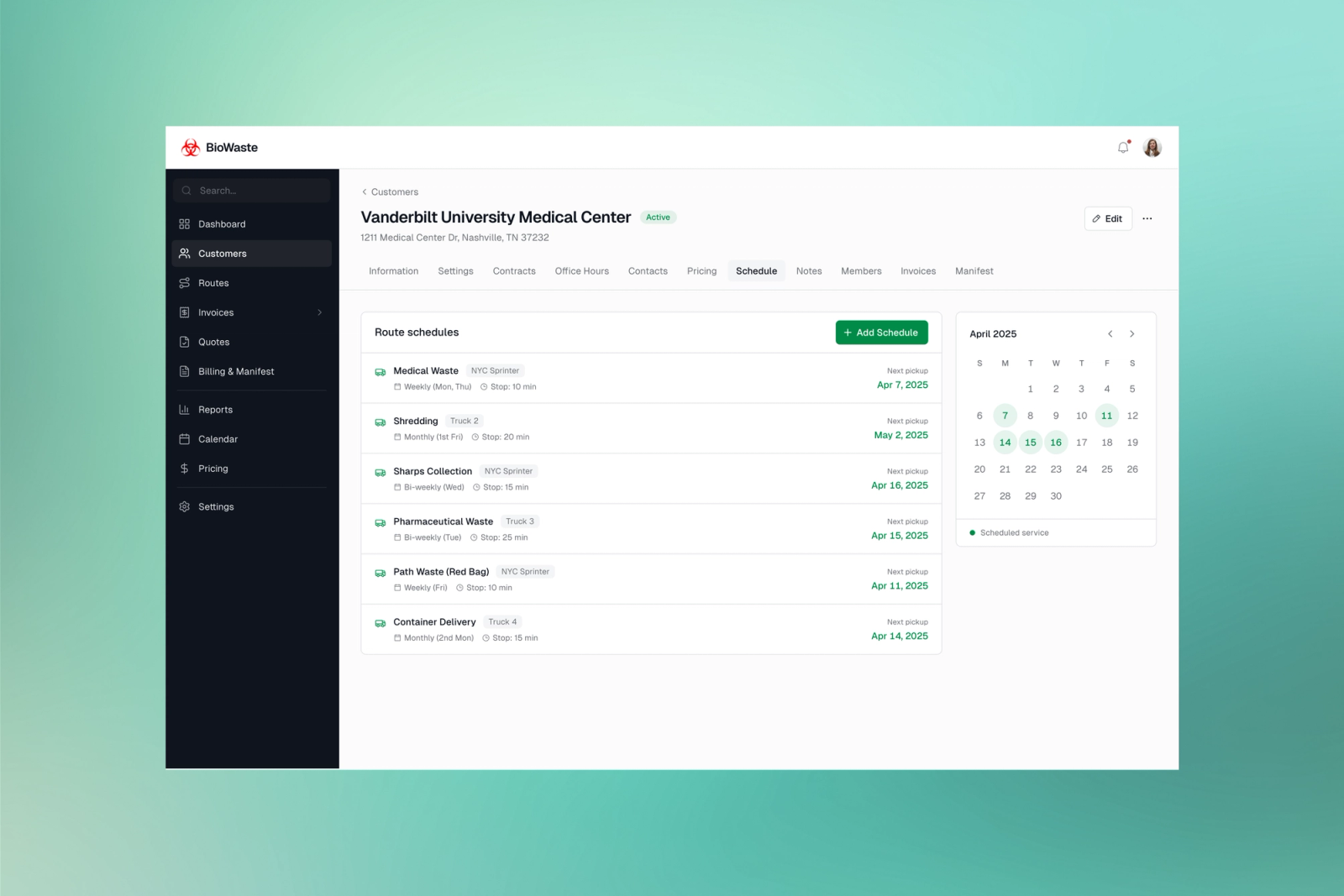
- Designed the client portal. Scheduling, manifest history, audit-ready exports
- Designed the driver app. Shift dashboard, navigation, manifest capture, support
- Built the cross-platform design system. Tokens, components, and patterns that scaled from a 13-inch laptop to a 6-inch phone in gloves
- Partnered with engineering on the shared data model so every surface read from the same source
Approach
I treated the job as the unit of design, not the user. Every role interacts with the same job, just at a different fidelity. That framing meant we could design once and project the right view onto each surface, instead of building three disconnected products.
- One job, three views. Same data, different density
- Real-time compliance state visible to every role
- Field-first detail patterns for the driver app without compromising office-side density on admin
- A shared component library so admin, client, and driver felt like one product, not a suite
Solution
Three connected surfaces, one operating system. The admin console runs the operation. The client portal gives hospitals confidence and a paper trail. The driver app turns each shift into a guided sequence. All three read and write the same job.
3
Connected surfaces
Real-time
Compliance sync
Key takeaway
“When the same job lives in three roles, the design isn't three apps. It's one system projected three ways. Once that frame held, the seams disappeared, and the regulated parts of the work stopped being where things broke.”